
Using Long-Term Care Insurance to Pay for Home Care in Michigan
If you or your loved one has a long-term care insurance policy, it likely covers in-home care — and we handle the entire claims process for you. From policy review to payment tracking, we've been managing long-term care insurance billing since the 1990s.
8 min read
Does My Long-Term Care Insurance Policy Cover Home Care?
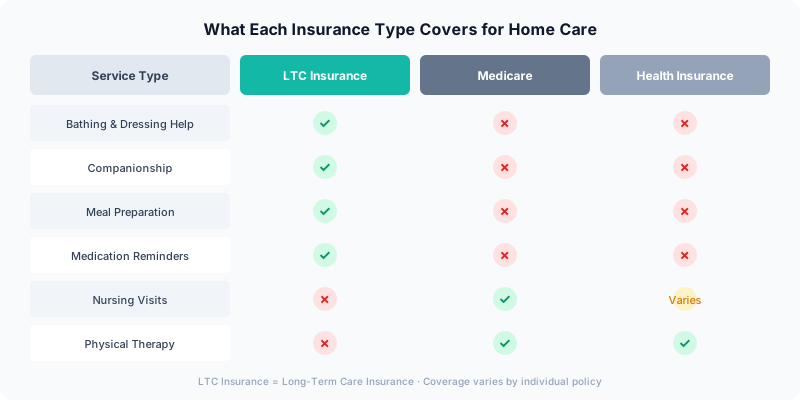
The short answer: almost certainly yes. The vast majority of long-term care insurance policies sold in Michigan — and nationally — include coverage for non-medical in-home care services. This means your policy likely covers the exact services we provide: personal care, companionship, meal preparation, medication reminders, and assistance with daily living activities.
However, every policy is different. The key details you need to understand are:
Elimination Period
The waiting period (typically 30, 60, or 90 days) before your long-term care insurance benefits begin. Think of it like a deductible measured in days.
Daily Benefit Amount
The maximum your long-term care insurance will pay per day. This determines how many hours of care are covered each day.
Benefit Period
How long your long-term care insurance benefits last — typically 2 to 5 years, sometimes unlimited. We track usage so you always know where you stand.
We review all of these details as part of our standard intake process. Many families don't fully understand their long-term care insurance policy until we walk them through it — and most are pleasantly surprised to learn how much of their care is covered.
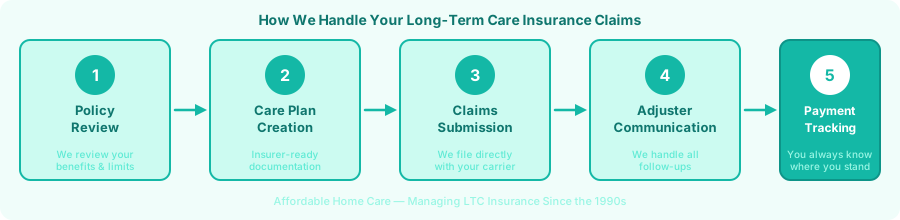
How We Handle Your Long-Term Care Insurance — Start to Finish
We've been managing long-term care insurance claims since the 1990s, when these policies first became popular. Here's our proven five-step process:
Policy Review
We review your long-term care insurance policy to understand your benefits — daily benefit amount, elimination period, benefit period, and covered services.
Care Plan Creation
We create a detailed care plan specifically designed to meet your insurer's documentation requirements — the foundation for successful claims approval.
Claims Submission
We prepare and submit all claims, billing documentation, and required paperwork directly to your insurance carrier on your behalf.
Adjuster Communication
We communicate directly with your claims adjuster — answering questions, providing additional documentation, and resolving any issues that arise.
Payment Tracking
We track your benefit usage so you always know exactly where you stand — how much has been used, what remains, and when to expect payments.
The bottom line: You don't have to figure out your long-term care insurance on your own. We handle every step so you can focus on your family.

Why Your Care Plan Matters for Long-Term Care Insurance Approval
Here's something most families don't realize: a vague or incomplete care plan is the number one reason long-term care insurance claims are delayed or denied.
Insurance carriers require detailed documentation that proves the care you're receiving is medically necessary and appropriate. A generic care plan that says "assist with daily activities" doesn't cut it. Your long-term care insurance company wants to see specific tasks, frequencies, and clinical justifications.
Our care plans are specifically designed to satisfy insurer documentation requirements. Every plan we create includes:
- Specific ADL (Activities of Daily Living) deficiencies documented
- Task-level detail for every service provided
- Caregiver credentials and training records
- Daily care logs with time-stamped entries
- Regular reassessments to reflect changing needs
- Physician certification of need when required
This level of documentation is why families who work with us receive their long-term care insurance payments in full and on time.

Long-Term Care Insurance Carriers We Work With
We have direct relationships with major carriers including Genworth, and work with all long-term care insurance providers. If your carrier isn't listed, don't worry — we've handled claims with virtually every long-term care insurance company in the industry.
What If You Don't Have Long-Term Care Insurance?
Don't worry — most families pay for home care without long-term care insurance. There are several other options available to Michigan families:
All Payment Options
VA benefits, Medicaid MI Choice, private pay, tax deductions, and more.
Explore optionsCost Calculator
Get a free estimate based on your care type, schedule, and location.
Estimate costTalk to Our Team
We'll help you explore every funding option available for your situation.
Get in touchLong-Term Care Insurance FAQ
FAQ
Common Questions
Common Situations Where Long-Term Care Insurance Helps
Families often use their long-term care insurance benefits in these situations.
Have a Long-Term Care Insurance Policy?
Call us and we'll review your policy, explain your benefits, and handle the entire claims process. Most families with long-term care insurance pay little to nothing out of pocket.